
Learning I have monoamniotic twins
Expecting twins adds an element of risk to the pregnancy. The mother is at greater risk of anemia, gestational diabetes, preeclampsia, and preterm labor, to name a few complications. The fetuses are at risk of complications arising from premature birth. The chance of the mother having to deliver via Cesarean section increases with having multiples. I had to come to terms with all of this as soon as I learned I had twins. When my blood screen results confirmed that my twins were identical, I had more risks to add to my worry list. Monochorionic monozygotic twins have more complications than dichorionic twins. Because most monozygotic twins are also monochorionic, I had to accept that now my twins were also at risk of structural anomalies which could affect one or both or their hearts, or were at risk of twin-to-twin transfusion syndrome (TTTS). If, God forbid, a twin were to die in utero, then the chance of the other twin dying from acute intertwin transfusion increases for monochorionic twins because of the anastomoses of blood vessels in the placenta of monochorionic twins. In the occurrence of acute intertwin transfusion, a drop in blood pressure from the demised twin will cause the blood to suddenly backflow from the surviving twin, potentially fatally damaging vital organs, or at least damaging the brain. And, on the off-chance that the girls were monoamniotic, I could add sudden death from umbilical cord constriction to my list of complications to worry about.
In the two weeks between my OB appointment and my next ultrasound with the Maternal-Fetal Medicine (MFM) specialist, my mind was plagued with doubt as to whether or not my girls were still alive. Perhaps I sound overly pessimistic, but experiencing multiple losses will do that to a person. I arrived at my perinatal appointment on pins and needles. But I could finally breathe a sigh of relief when the ultrasound tech at the perinatology clinic confirmed both twins were alive and well. I was elated. The lightest I’d felt in days. Then the MFM doctor arrived.
He scrutinized the ultrasound. The twins were clearly monochorionic; he was looking for the intervening membrane to confirm they were diamniotic.
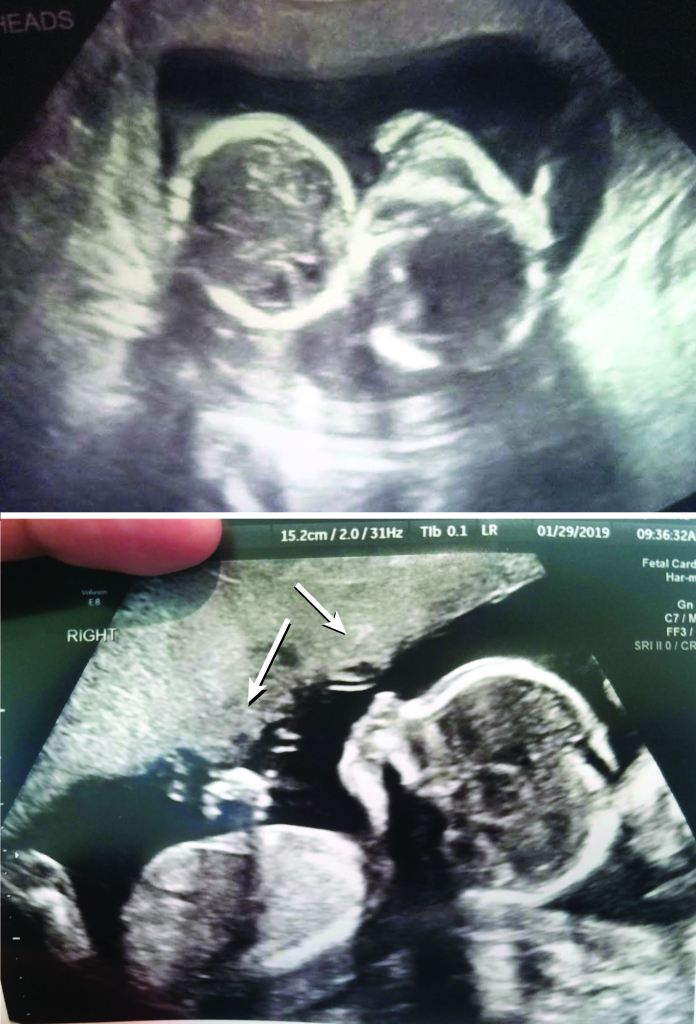
“I’m not seeing an intervening membrane,” he told the tech. The mood in the room suddenly changed. The smile on my face flipped a 180. Everyone was silent, intently studying the ultrasound screen. He turned his attention to the twins’ umbilical cords. Doppler imaging highlighted their cords in an unambiguous twist. Their insertions onto the placenta were suspiciously close to one another. The absent intervening membrane and the close cord insertions were suggestive of a monoamniotic pregnancy (Fig. 1). The twisted umbilical cords hammered the nails into the proverbial coffin. In all my readings of twins, not much was mentioned of monoamniotic twin pregnancies other than they were marked by complication and high mortality. My rush of relief quickly re-subsided into gloom and anxiety. “I’m sorry,” the tech said to my husband and me as we left the room.
I would have to wait a grueling two weeks before I could talk about my momo diagnosis with my OB. It was the most unbearable two weeks of my life. Time passed impossibly slow. Not even the anticipation of Christmas Day as a child felt so painful. All I could do to stay sane was research the answers to all of my nagging questions. What was the prognosis of the twins I was carrying? What made monoamniotic pregnancies so risky? How would this diagnosis change my prenatal care? The research process would take me on an emotional roller coaster ride, but the final impression was that we were going to make it off the ride alive.
My next post will summarize the takeaways I gathered for what to expect on my momo pregnancy journey. It was the inspiration for starting my blog.
Feel free to share your experience of discovering your twins were monoamniotic in the comments below!
 My Momo Journey